
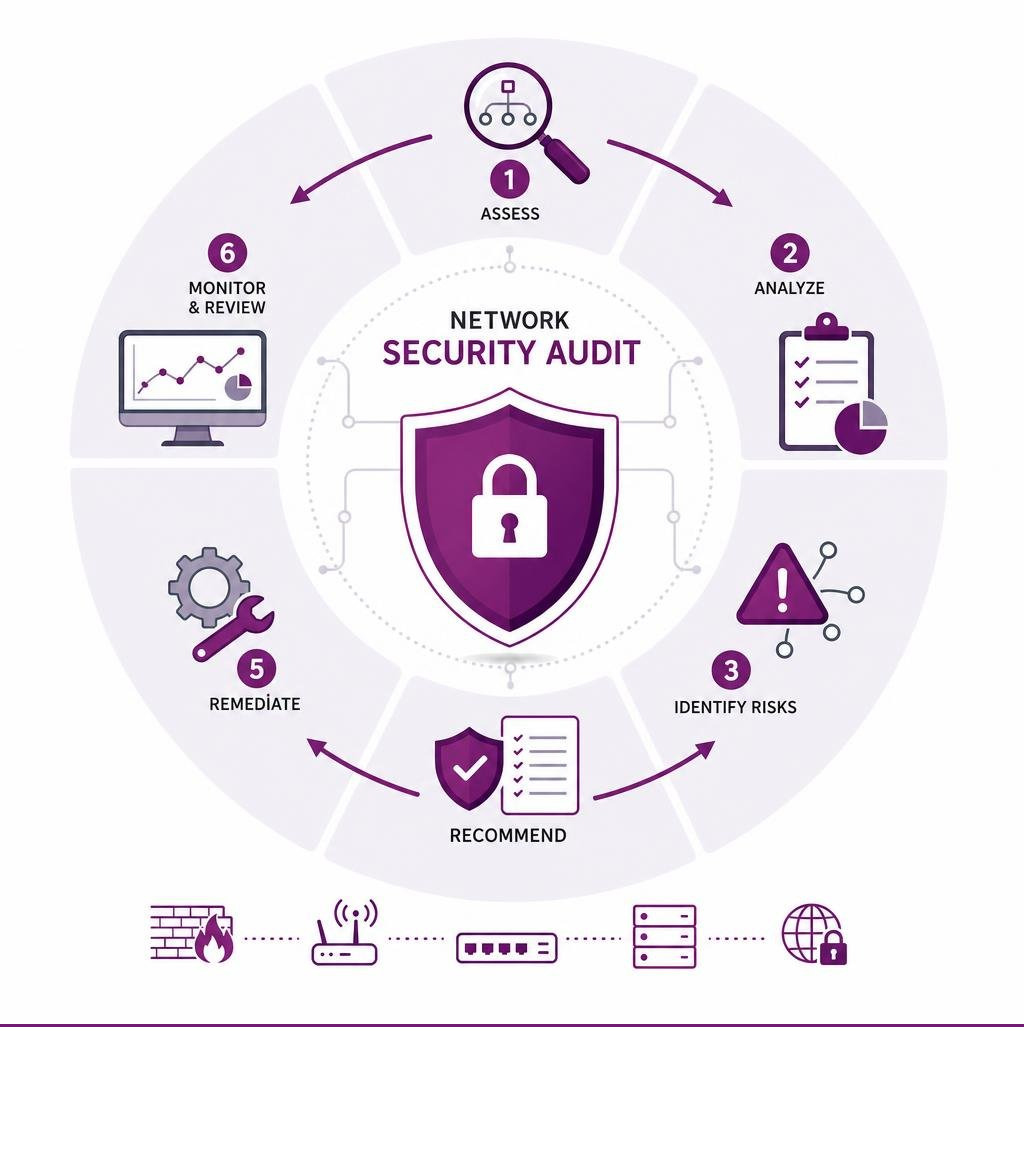
Why Every Business Needs a Network Security Audit
A network security audit is a structured review of your organization’s IT infrastructure — examining hardware, software, configurations, policies, and access controls — to find vulnerabilities before attackers do.
Quick answer: What is a network security audit?
| Question | Answer |
|---|---|
| What it is | A formal evaluation of your network’s security controls, configurations, and policies |
| Who needs it | Any organization that stores, transmits, or processes sensitive data |
| What it finds | Misconfigured firewalls, weak passwords, unpatched software, excessive access privileges, exposed remote access, and unmanaged AI/cloud tools |
| How often | At minimum annually; quarterly for high-risk areas; continuously for critical systems and internet-facing assets |
| Why it matters | IBM’s 2025 Cost of a Data Breach Report puts the global average breach cost at $4.44 million — audits help you avoid becoming a statistic |
As of July 2026, businesses are dealing with faster-moving threats, more cloud and remote-work exposure, and attackers that increasingly use automation and AI. Check Point’s 2026 Cyber Security Report found that organizations experienced an average of 1,968 cyberattacks per week in 2025, a 70% increase since 2023.
The hard truth: most networks expose more risk than their owners realize.
That gap between what you think your network looks like and what it actually looks like is exactly what a network security audit is designed to close. It’s not just a compliance exercise. It’s how you find the small misconfigurations, forgotten firewall rules, outdated systems, exposed SaaS integrations, and unmanaged AI tools that attackers actively look for.
This July 2026 guide walks you through everything — from audit components and methodologies to compliance requirements, common vulnerabilities, and the tools that make audits more effective.
I’m Roland Parker, Founder and CEO of Impress Computers, a managed IT services and cybersecurity firm serving Houston-area businesses since 1993. Over more than three decades helping manufacturing, construction, and professional services organizations secure their networks, I’ve seen how a well-executed network security audit separates businesses that stay protected from those that don’t. The sections ahead reflect both industry best practices and the real-world lessons we’ve learned working with clients across Texas.
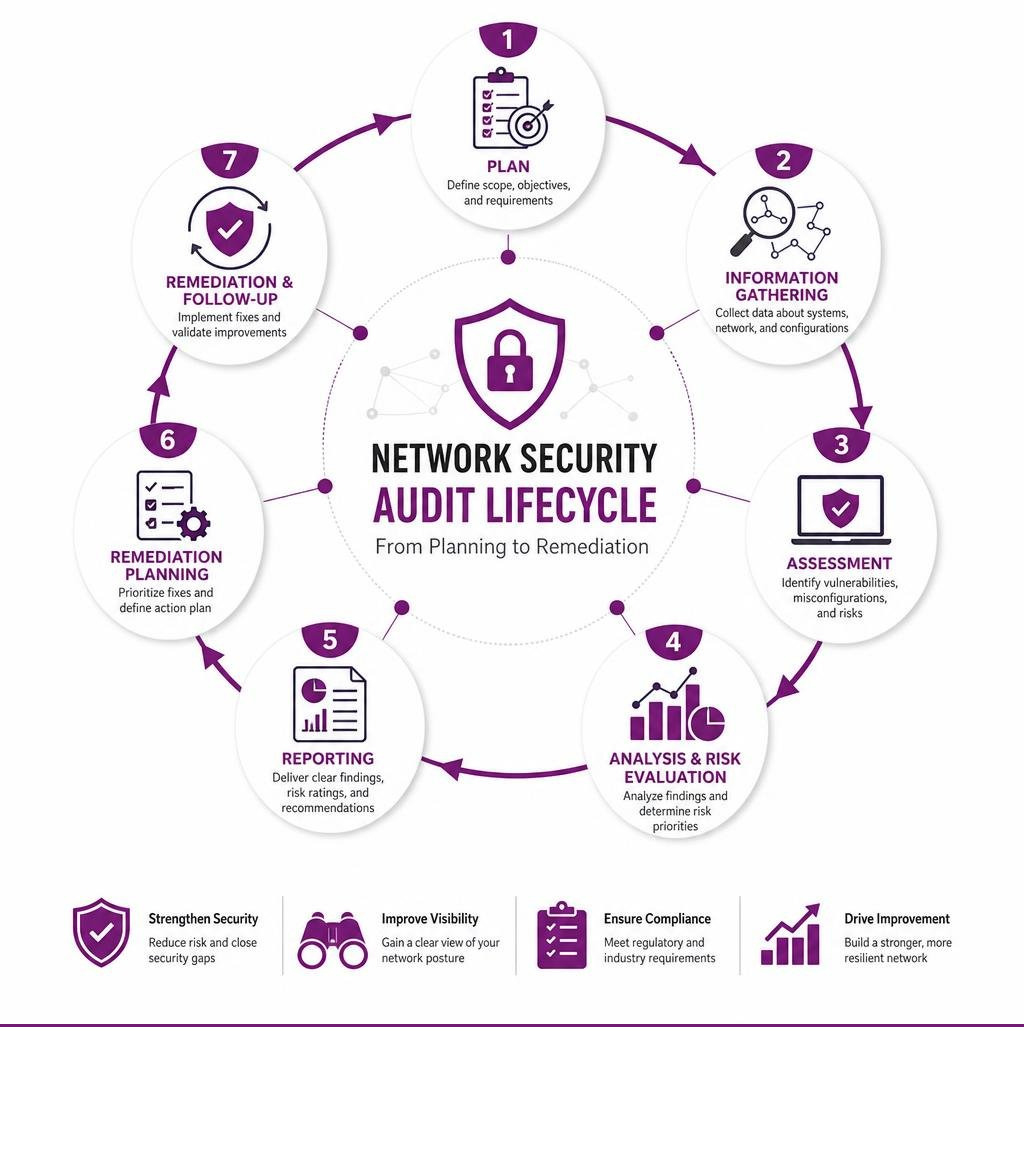
Understanding the Core Components of a Network Security Audit
An effective network security audit is not a superficial scan. It is a comprehensive technical and operational review designed to reconcile your documented security policies with the actual behavioral state of your network. In 2026, that means validating traditional infrastructure, cloud services, remote access, identity systems, endpoint controls, and the growing use of AI-enabled business tools.
To establish a baseline for your security posture, it is helpful to look at an Introduction to Network Security to understand how fundamental hardware and software layers interact. From there, our audit methodology aligns with highly authoritative, industry-standard frameworks, including the NIST SP 800-115 Technical Guide to Information Security Testing and Assessment, the NIST Cybersecurity Framework, and CISA’s guidance on prioritizing known exploited vulnerabilities.
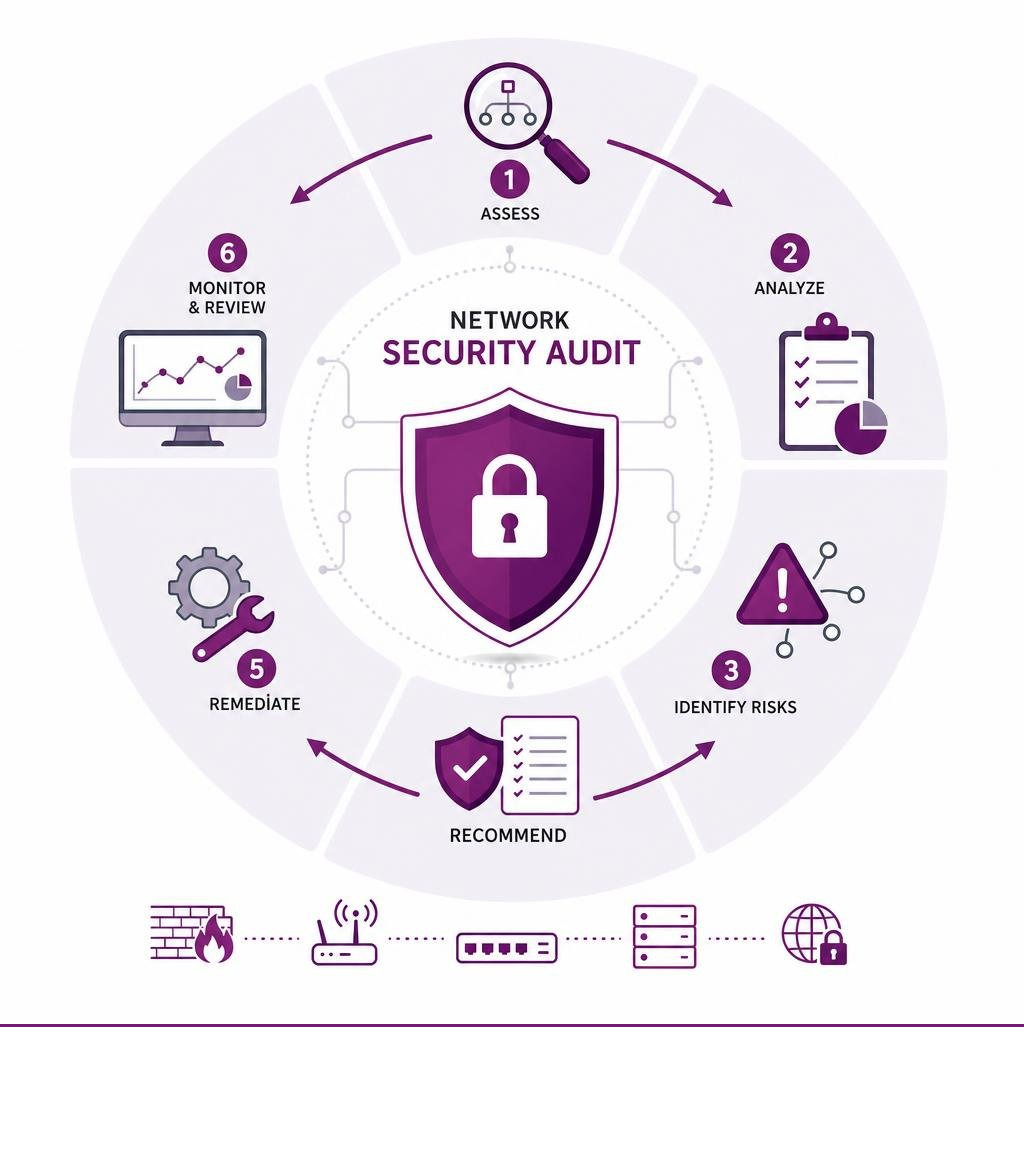
A thorough assessment covers several crucial domains:
- Comprehensive Asset Inventory: You cannot secure what you do not know exists. The discovery phase must map all physical servers, workstations, virtual machines, cloud resources, remote endpoints, SaaS applications, and unmanaged AI tools. This process frequently uncovers “shadow IT”—such as forgotten test environments, unauthorized network-attached storage (NAS) devices, unsanctioned file-sharing apps, or browser-based AI tools—that bypass standard security controls.
- Risk Assessment and Threat Modeling: We evaluate the potential impact and likelihood of various threat vectors, including ransomware, phishing campaigns, business email compromise, insider threats, credential theft, and attacks against exposed remote access services. This ensures that remediation efforts are prioritized based on actual business risk rather than arbitrary checklists.
- Vulnerability Scanning and Exploit Prioritization: Automated utilities identify known security gaps, outdated operating systems, and missing security patches across all discovered hosts. In 2026, the best programs also prioritize vulnerabilities that are internet-facing, actively exploited, automatable, or listed in CISA’s Known Exploited Vulnerabilities catalog.
- Policy and Governance Review: We examine your written security policies, incident response plans, employee training records, vendor access procedures, and acceptable-use policies for AI and cloud tools to ensure they align with your technical configurations.
Perimeter Security and Firewall Configurations
Your firewall is the primary gateway between your trusted internal network and the public internet. Consequently, firewall configuration reviews are a critical component of any technical assessment. In our experience, firewall risks rarely stem from hardware failures; instead, they accumulate gradually over time through temporary exceptions, emergency rules, legacy configurations, and cloud security group changes that are never cleaned up.
We analyze firewall rulesets to enforce the principle of least privilege. This includes examining:
- Overly Permissive Inbound Rules: Identifying “any-to-any” rules that allow unrestricted traffic from the public internet into sensitive internal zones.
- Egress Filtering: Restricting outbound traffic to only authorized ports and destinations. This is crucial for preventing compromised internal systems from communicating with external command-and-control (C2) servers.
- Unused and Shadowed Rules: Eliminating redundant rules that complicate firewall management and introduce human error.
- Exposed High-Risk Ports: Ensuring that dangerous administrative protocols—such as Remote Desktop Protocol (RDP/TCP 3389), Server Message Block (SMB/TCP 445), Telnet (TCP 23), and unprotected management interfaces—are never exposed directly to the internet.
To understand how these perimeter defenses fit into your broader security strategy, review our guide on The Role of Firewalls in Securing Networks.
Network Segmentation and Access Controls
A flat network architecture introduces significant security risks. If an adversary compromises a single low-risk endpoint in an unsegmented environment, they can easily move laterally to access domain controllers, databases, backups, and sensitive financial records.
To mitigate this risk, we audit your internal network segmentation. By partitioning your infrastructure into distinct Virtual Local Area Networks (VLANs) and implementing micro-segmentation, you isolate critical workloads. For example, your guest Wi-Fi, administrative workstations, production database servers, backup systems, and operational technology devices should exist on separate network segments with strict access control lists (ACLs) governing any inter-VLAN communication. This design is highly detailed in our analysis of Network Segmentation: Enhancing Small Business Cybersecurity Through Isolation.
Furthermore, we evaluate your Identity and Access Management (IAM) integrations. This includes verifying that phishing-resistant Multi-Factor Authentication (MFA) is enforced for privileged accounts and remote access, validating password and passkey policies, reviewing conditional access rules, and auditing user privileges. For businesses handling payment card data, these segmentation and access controls are not optional—they are strictly mandated under the PCI DSS Official Portal guidelines.
Comparing Audit Methodologies: Periodic vs. Continuous Network Security Audit
Historically, organizations treated security audits as annual, “point-in-time” events. While periodic audits remain essential for compliance and deep-dive technical validations, the rapid pace of modern infrastructure changes makes a static approach insufficient. In July 2026, organizations should assume that cloud permissions, SaaS integrations, endpoint status, and exposed services can change weekly—or even daily.
| Audit Dimension | Periodic Audit | Continuous Audit |
|---|---|---|
| Frequency | Scheduled intervals (e.g., annually, semi-annually, or quarterly) | Real-time, ongoing automated monitoring |
| Nature | Reactive and historical (evaluates past performance) | Proactive and immediate (detects drift quickly) |
| Scope | Deep-dive, including policy reviews and manual verification | Automated control validation, configuration monitoring, exposure management, and logging |
| Key Benefit | Thorough, independent validation of overall security posture | Rapid detection of configuration drift, newly published vulnerabilities, and active exploitation indicators |
| Primary Challenge | Becomes outdated quickly as network configurations change | Requires investment in SIEM, EDR/XDR, vulnerability management, and well-tuned alert workflows |
To build a robust security program, organizations should adopt a hybrid approach. This combines the operational depth of periodic assessments with the real-time visibility of continuous validation. For customizable policy frameworks to support this transition, refer to the SANS Institute Information Security Policy Templates. Additionally, federal guidance on establishing these assessment programs can be sourced via CISA Cybersecurity Assessments.
How to Define the Scope of Your Network Security Audit
Defining a clear, unambiguous scope is critical to the success of your network security audit. An undefined scope leads to missed assets, incomplete testing, and unexpected project delays. When planning your audit, you must establish boundaries across all modern operational environments:
- On-Premises Infrastructure: Core switches, routers, firewalls, physical servers, storage area networks (SANs), local wireless access points, printers, cameras, and other connected devices.
- Cloud and Hybrid Environments: Virtual networks, security groups, API endpoints, cloud database instances, identity providers, cloud backups, and Microsoft 365 or Google Workspace configurations.
- Remote Work Architecture: Virtual Private Network (VPN) gateways, secure web gateways, zero trust network access tools, remote endpoint security configurations, and unmanaged home-office access risks.
- Third-Party Integrations: Dedicated vendor connections, supply chain portals, API integrations, managed service accounts, and partner remote-access tools that could allow external vulnerabilities to transition into your environment.
- AI and SaaS Usage: Approved and unapproved AI tools, browser extensions, file-sharing apps, collaboration platforms, and data flows that may expose confidential business information.
To help structure your internal scoping discussions, review our checklist on Four Ways to Protect Your Business Network.
Best Practices for Executing a Network Security Audit
Executing an audit without careful planning can disrupt business operations, particularly when performing active vulnerability scanning or configuration testing. We recommend adhering to the following 2026 best practices:
- Engage Cross-Functional Stakeholders: Involve representatives from IT operations, compliance, legal, finance, HR, and business unit leaders early in the process. Security is not just an IT problem; it requires organizational alignment.
- Establish Rigorous Change Management: All active scanning and testing should be scheduled during pre-authorized maintenance windows. Technical teams must have documented rollback plans in place in case a scan triggers an unexpected system disruption.
- Prioritize Exploited and Internet-Facing Risk: Do not rely on severity scores alone. Give priority to vulnerabilities that are known to be exploited, externally reachable, easy to automate, or located on systems that store sensitive data.
- Incorporate Cybersecurity Awareness: A network is only as secure as the users who access it. Ensure your audit evaluates human risk factors, such as susceptibility to phishing, business email compromise, MFA fatigue, and social engineering. Learn more about cultivating a resilient organizational culture in How to Protect Your Company with Cybersecurity Awareness.
- Incorporate Independent Validation: While internal IT teams perform essential day-to-day monitoring, an independent third-party auditor provides the objectivity needed to identify overlooked gaps. For structured control guidelines, we align our assessments with the CIS Critical Security Controls.
Common Vulnerabilities Uncovered During Assessments
During our assessments, we consistently identify several recurring technical vulnerabilities across diverse corporate networks. These security gaps represent the primary entry points for modern cybercriminals. They are especially important in 2026 because vulnerability volume remains high and attackers often exploit newly disclosed flaws before internal teams can complete traditional monthly patch cycles.
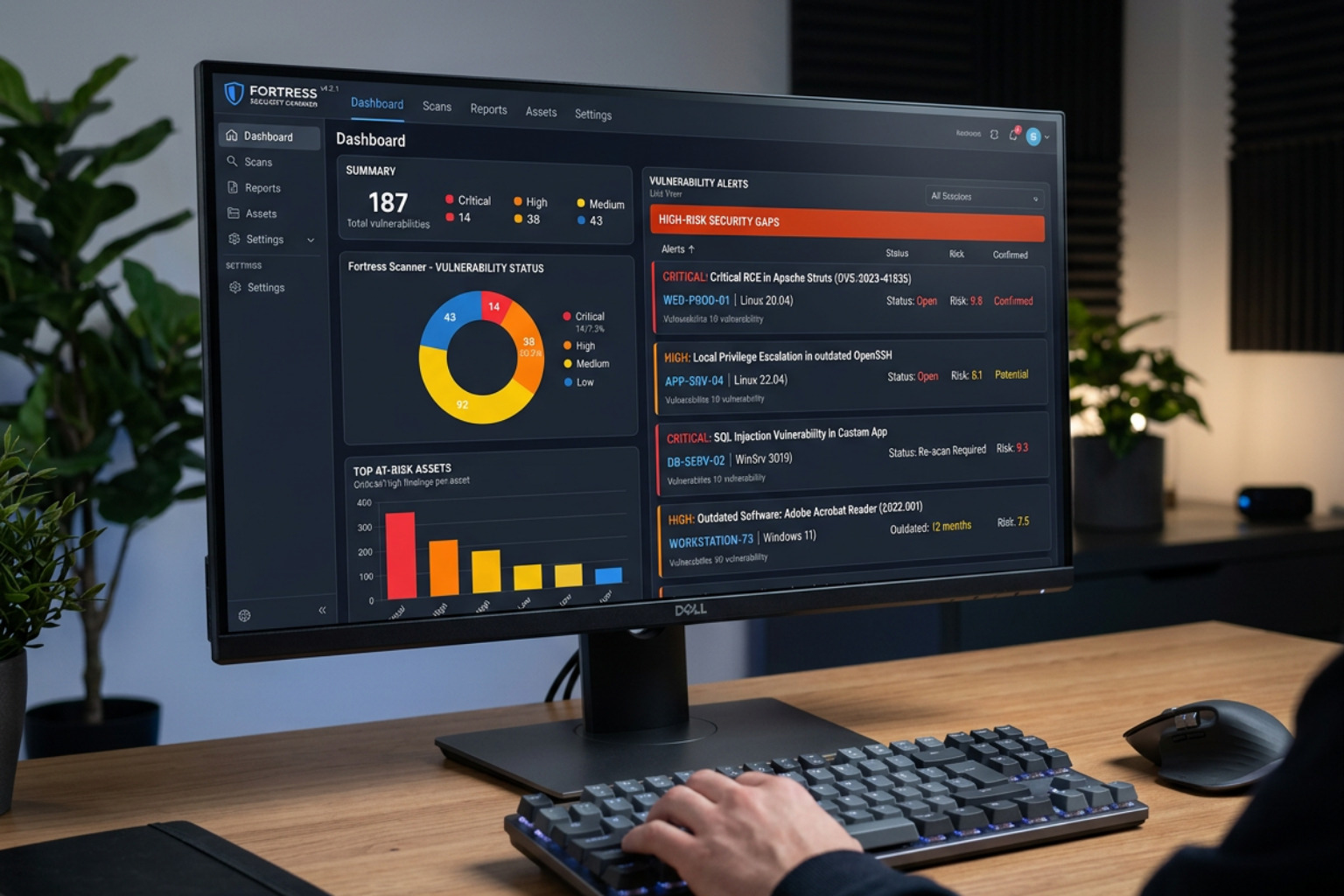
- Misconfigured Firewalls and Permissive Rulesets: Many organizations leave legacy rules active long after a vendor or project has departed. This creates unnecessary entry points.
- Default and Weak Credentials: From network printers and conference room smart TVs to administrative portals on core switches, default credentials remain a pervasive issue. If a device is attached to your network with factory-default login details, it represents an immediate compromise vector.
- Unpatched Software and Operating Systems: NIST reported that CVE submissions increased 263% between 2020 and 2025, highlighting the growing volume of vulnerabilities security teams must track. Keeping pace with security patches is difficult, but unpatched operating systems and exposed edge devices are easily exploited by automated ransomware payloads.
- Inadequate Encryption and Weak Protocols: Using outdated protocols like SSL, TLS 1.0, or TLS 1.1, or running unencrypted administrative services like Telnet or HTTP, exposes sensitive credentials to interception on the local network.
- Identity and MFA Gaps: Weak conditional access policies, shared administrator accounts, inactive user accounts, and MFA exclusions can give attackers a direct path into email, cloud storage, and line-of-business systems.
- Unmanaged AI, SaaS, and Browser Extensions: Employees may use unsanctioned tools to summarize files, share documents, automate workflows, or install browser extensions. Without review, these tools can create data leakage, compliance, and vendor-risk issues.
Addressing these vulnerabilities is not only a matter of immediate defense; it is also a fundamental pillar of business continuity. For a comprehensive look at how vulnerability remediation integrates with business resilience, read about Cybersecurity and Disaster Recovery.
Frequently Asked Questions about Network Auditing
What is the difference between a vulnerability scan and an audit?
A vulnerability scan is an automated, targeted process that searches for known technical security weaknesses, missing patches, and misconfigured ports across your systems. It is a valuable diagnostic tool, but it only represents one component of a broader network security audit.
An audit is a comprehensive evaluation that includes manual verification, network architecture reviews, identity management analysis, and policy assessments. While a vulnerability scan tells you what is unpatched, an audit explains why the patch management process failed, how an attacker could exploit that gap to move laterally, and what governance changes are required to prevent the issue from recurring.
How do compliance regulations impact network auditing?
Compliance regulations—such as GDPR, HIPAA, and PCI DSS—mandate regular, documented security assessments to protect sensitive consumer, payment, and health data. For example, organizations handling protected health information must satisfy the administrative and technical safeguards of the HIPAA Security Rule.
Failing to conduct these audits and maintain detailed compliance evidence can result in severe regulatory penalties, legal liabilities, and reputational damage. An audit ensures your technical controls align directly with these legal and regulatory frameworks.
Can an audit be performed entirely with automated tools?
No. While automated tools and AI-driven platforms are incredibly efficient at gathering data, scanning for vulnerabilities, and detecting real-time anomalies, they cannot replace human expertise. Automated tools frequently generate false positives and, more importantly, they cannot evaluate human workflows, physical security controls, or complex business logic.
An effective audit requires a hybrid approach: using automated tools for continuous data collection and technical scanning, combined with manual verification and expert analysis to interpret the findings and build a practical, risk-prioritized remediation roadmap. For structured guidance on manual and automated testing methodologies, refer to the OWASP Web Security Testing Guide.
Conclusion
A network security audit is not a one-time hurdle to clear for compliance. It is a foundational business practice that provides the visibility, clarity, and actionable intelligence you need to defend your organization against an increasingly complex threat landscape.
At Impress Computers, we specialize in delivering comprehensive cybersecurity management and managed IT services tailored to the unique operational demands of Houston-area businesses. Serving clients across Brookshire, Cypress, Fulshear, Katy, Missouri City, Richmond, Rosenberg, Sugar Land, and The Woodlands, we bring deep, industry-specific expertise to the manufacturing, construction, banking, legal, and CPA sectors.
We back our partnerships with a 15-minute response guarantee and a commitment to maintaining 99.9% uptime for your critical infrastructure. Whether you need to prepare for an upcoming compliance audit, secure a hybrid remote workforce, or implement continuous threat monitoring, we are here to protect your business.
To take the first step toward securing your network, explore our comprehensive approach to Cybersecurity Management with Impress Computers or contact us today to learn more about our Managed IT Services.
